These Old Spice Guy videos crack me up - and he's not hard to look at either. This one is for you Librarians out there!
For some reason I have bookmarked "10 Horrible Deep Sea Creatures" and have no memory of why - but, probably for research on something I may have wanted to write for Ocean Magazine; who knows. Also in my bookmarks (both listed under "writing research") I have "Moral Insanity: A Brief History" - huhn, who knows what I was looking for when I found that. Okay, well, Enjoy! *laugh*
I am trying to decide whether to do a 'trailer' for SWEETIE. I did one for Tender Graces and for Secret Graces. But, I'm just not sure if people look at them or if they are 'worth' doing or if they add anything to the process or enjoyment of my books, etc. They're fun to make, but they do take a bit of time. Bellebooks did TG for me, and I asked if I could do SG and that was my first attempt. I'm on the fence about doing one for Sweetie. What do you think? Any opinions/suggestions?
Also, speaking of SWEETIE - I have one review trade paperback sized copy left. If you are a book blogger/reviewer, I will send you this proof - it is an uncorrected galley proof (for those who don't know what that is - it means it's an early version printed out before all the errors are caught and fixed), and is for reviewers only. Contact me at my hotmail or gmail addresses (you can go to my website or look at my blogger profile to get an email) if you are interested in reviewing Sweetie. I only have one, so first one to email me I will send it on.
I will remind everyone that Bellebooks/Bell Bridge Books will be accepting new manuscripts for literary/women's fiction beginning November 1. They are growing and it's exciting!
I came across The Best Damn Creative Writing Blog "getting your literary life," and am exploring it, and enjoying it, thoroughly. Just scroll the front page and you'll see plenty of nuggets to click and read.
I'll miss the Cathy comic. I'm glad they will be having Cathy Classics, but still, I'd love to see where else her life leads her. Well, things have to end sometimes, don't they?
I've been enjoying "Blind Pig & The Acorn" blog - recipes, posts about Appalachia and its writers and people and music. Love it.
And as always, Teresa Frohock has written a thought-provoking blog.
The Return of Buffalo Horse. If you've read SG, you know there is a 'scene' where Virginia Kate opens replica of Ponokamita (or Pono-Kamita) - the Buffalo horse - from Miss Darla. It's one of my favorite scenes with so much symbolism and nature and power.
Tartitude bought a pen like mine! She fell in love with it just as I did - love love this pen. My son, Daniel, bought me one for Christmas and it's one of my prized possessions. I use it for signings, etc.
Y'all have a great day!
Showing posts with label publishing. Show all posts
Showing posts with label publishing. Show all posts
Wednesday, October 6, 2010


Saturday, July 24, 2010
What if publishing your book was like accepting and working for any other job?

My advance will be six figures—I’m in the money!
You accept the job and they offer you some “upfront” money to come work with them. That upfront money will take care of expenses and such until you show them how successful you will be and how much money you will make them, or how much output you provide to make yourself a worthwhile risk. They’ll hold back your salary until you work enough to make up that upfront money. If you work for a huge company and they have reason to believe you’ll make them lots of moola, your advance could be Big. But, if like most of us, you are a bit more of a risk, advances aren’t going to be big, and some “companies” do not pay advances at all.
I receive small advances on my books and they are manageable enough to pay back quickly. You have to “pay back” that advance—meaning, you have to sell enough books to cover the advance before you begin making royalties. Dream big, but know the realities.
I’m going to buy a car and a house and ten gallons of gelato from my trip to Italy.
 Better check your salary again! Whether big business or small, the money earned has to go many different places. Imagine Bill’s Tools & Supplies. Bill the owner hires you to make tools, and when you make those tools, he sells them. From that money, he has to pay rent or mortgage on his building, utilities and other expenses; he has to pay taxes, insurance; he has to buy inventory; he has to pay all of his employees; he has to pay himself. If you provide Bill with a service, you are only a part of the entire operation of who has to be paid. The money has to be spread around to keep the business afloat.
So, your book is published (and I’m talking print here, not e-book). Everyone involved receives their cut. Industry standard royalties are anywhere from 6 to 15 percent—the low end for paperback and higher end for hardcover. So, let’s suppose you get 10% royalty on each book you sell, and your book sells for $15.00 (and SELLS for that, not is priced at that; there is a difference. After any discounts are taken, the final price is what your royalties are based on).
Ten percent of $15.00 = $1.50 per book. (If you have an agent, take 15% from that $1.50 and you get less than that).
Takes a whole lotta books to make a living off that, doesn’t it? Imagine working for $1.50 an hour—can you make a living on $1.50 an hour? Not likely. And it’s unlikely you are selling a book an hour every day for 8 hours a day, five days a week, but, even if you sell twice that seven days a week, that’s still not enough to go yacht shopping by any stretch.
(E-books do offer better royalties, simply because there is less overhead.)
Be realistic about your salary. Royalties can be really good one month and not so good another month. You have to factor in expenses, too. Again, dream big, but temper it with the realities of just how difficult it is to make a good living being an author.
My book will be reviewed by: Magazines, Oprah’s Book Club, New York Times Books, Publishers Weekly, et cetera.
You’ve been working hard. You’ve put in your time and then some. You walk by The Big Boss’s office every so often, showing him/her your determined face, your sincere attitude, the nights you’ve stayed late, the weekends you’ve worked. You’ve gone to meetings. You’ve put out good work. You’ve done everything you can think of to be noticed by The Big Boss. And, well, he/she just doesn’t notice you. He/She has so many other employees who are doing the same thing, and some of them are backed by supporters or agents who are able to slip into Big Boss’s office and put in a good word or, some other employee just happens to be in the elevator with The Big Boss when she/he’s in a good mood, or when he/she just happens to be looking for that particular person’s smile or nod or look or good morning. Or somehow, an employee has some buzz going on a project he did.
There’s a lot of competition for space out there. And many times, the Big 6 published authors garner the most attention. Next are authors who’ve already had best sellers, or are gaining attention for some other reason, et cetera. It’s a saturated business. It’s a tough business. The Big Boss is busy, and important, and frankly, doesn’t have time to get to know every little employee out there—no matter how sincere or hardworking, and even, no matter how lovely your work is.

Your proposal is done. You’ve worked hard on the Slim Slam Piddly Lam account. It’s all done up in a nice folder, and you are proud of it. Now time to get it to the right hands. There’s two-hundred offices in the building; heck, if you could get even one-hundred or so Boss Peoples to look at your proposal, even that would be great; better to have all two-hundred, but, you’ll settle for half. You take your shiny proposal for the Slim Slam Piddly Lam account and make a hundred-fifty copies. You put them on your desk and wait. One person comes by—it’s Ms. Office Fifteen. She’s been a casual acquaintance and you bought her coffee. She takes a proposal, then because she likes you, she takes three more. You are so happy! Four proposals! The other hundred-forty-six sit. So you make the rounds of a few offices: “Will you take my Slim Slamp Piddly Lam account proposal?” And a couple take one, but it ends up under a big stack of other proposals.
Some shake their heads no. They have enough proposals, no more space. You realize you just don’t have time to go to all hundred-forty-six offices, so you place your Slim Slam Piddly Lam account proposals on your desk, again, and hope word will get around. Your supervisor who works with you on accounts is helping, too, taking half of those proposals and sending out word, newsletters, samples, et cetera. A few more proposals are placed, but, nowhere near what you thought.
The truth is: sometimes you and your publishers (agent/editors/publicists, whomever) have to practically beg a bookstore to stock your book—even if you are traditionally published by a viable press. Bookstores have limited space and they’re going to stock the “bigger names” –that means bigger in publishers and in authors.
Sadly but true, you can be a champion of brick and mortar bookstores, but when you approach them, they may or may not care. They may or may not stock your book. They may stock one just to be nice. Since you can’t conceivably contact every bookstore there is, there’s no way to get your book noticed by many bookstores—for them, it’s about their budget and sentimentality usually goes one way: The author may be sentimental about having their books in brick and mortar bookstores but the sentimentality is often not returned—it’s a hard cold world out there in this book business. Make friends with your local bookstore owners and you probably will have success there, at least.
Once I have one book published, I am assured to have more published.
You landed the Shots a Lot account! Oh Happy Day! Surely now the next couple of accounts will be Yours! You can kick back and relax now. Or . . . not.
With each book, you (or if you have an agent, the agent) still need to convince your publisher/publishing editor to take on your book. Even if the last book was successful. Now, granted, if you’ve had success with your first book or books, the chances are higher; however, you still need to present the book and have it approved.
This means: just as with the first time, you’ll write your novel without knowing whether you will have it published and without knowing whether all your work will be realized in print. You write regardless of the outcome. You write never knowing where it will take you, or if you will be published, if you will ever make a dime, or if you will only make a dime.
How many jobs would you take knowing these kinds of odds? How many jobs would you take making an unknown salary? How many jobs would you take where you could work your arse off for weeks, months, a year, or more, and Maybe MAYBE get paid, and maybe not? Would you take that job?
You have to love this business and have a crazy amount of faith and hope and daring.
I want this job—do you?

Monday, March 29, 2010
My arrogant naivety had its ass kicked by reality in this publishing/book biz

You who know me, know I try to speak truths and honesty. So, over a few posts here and there I’ll admit a couple things I thought THEN versus NOW. Miss Kathryn ain’t so naïve and certainly isn’t arrogant any longer! And believe me, I’m still learning about this publishing and book business.
Errors Happen, no matter how careful you are.
I’ve done a series of posts on Cleaning Up Our Manuscripts but the truth of the matter is, Stuff Happens. THEN, when I’d read an author’s book and find an error, I’d think, “An error! Couldn’t someone catch that? I mean Reeaaaly.” I lifted my naïve arrogant eyebrow over it. The truth also is that editors at publishing houses are busy. The job isn’t what it used to be, at least I understand it to be this way. Authors need to take more and more responsibility for many things, and sending clean work to the editor/publisher/agent is one of them. I’m proud of how clean my manuscript is by time I send it—and they are happy to get my cleaned manuscript. Still. Stuff Happens.
Before I go on, folks, this absolutely does not excuse sloppy lazy work. I’m talking about the stuff that seems to hide in an author’s manuscript despite hard diligent work.
Author writes the manuscript draft. Then author begins re-writes. That means things most certainly will change and if they don’t, well . . . they probably should, really. During these first few “read throughs” of the manuscript, errors are found, but not only that, scenes/details change, and those scene/detail changes may affect/effect something that happens later on. In subsequent “go throughs” these should be found, one hopes.
Author reads manuscript repeatedly, fiddles, tweaks, and then is ready to send it to the editor at the publishers for them to do their thing. The ms is sent and the Author then waits, sweating, hoping the editor likes the work. What? You ask. Back up, you say. But, don’t they already know what the book is about? Don’t you already have a contract at that point? Well, thing is, they haven’t read the entire manuscript. So, all that work you did could be for naught if the editor thinks it doesn’t work. So far, I’ve been lucky in that respect.
*whew; wiping brow*
So, let’s say the book works. The editor makes his/her marks and/or suggestions/questions and sends those comments back to the Author. The Author begins reading/tweaking again based on those found errors/suggestions/comments—maybe there is a big change in scene(s) or maybe there are only little nitty things. Author may not agree with something and defends it, or Author may agree, or author agrees to give in. While going through the manuscript with the editor notes, Author also feels compelled to make a few more little tweaks. Author sends it back to editor at pub hou se.
se.
Then comes the galley proof, the “This is it. You best find any lingering errors because all chances are gone after this.”
So Author pants and sweats, and once again, scours the manuscript. Reading it line by line to catch an error that may have sneaked by. Perhaps she has a friend or a spouse read it as well, just in case. What shocks Author is she/he reads the pages after spouse/friend does, and even though they have scoured it, and the editor has scoured it, the Author still finds sneakity sneakers in there! How how how? Author wails. How could there possibly be any errors at all? The work has been read and read and read and read—and by multiple people. Line by line. Carefully. Author really feels exceptionally nervous about this. However, deadline is deadline and fingers are crossed, so are eyes. Exhaustion sets in.

Then comes the Final Galley. Author can look at it quickly but there is no time for a slow line-by-line reading. There is time to make sure everything looks okay at a glance: Margins, headings, paragraphs, etc, and maybe a quick flip through, but that’s it, because to make changes at this point is a pain in the arse for the editor, so you better have found them all before this. And editors have more than one author they are working with so asking for changes at this point is frowned on and big arse acher. Really, by now, it’s a matter of just glancing over it to make sure nothing looks wonky.
The publishing house sends it to print. How the book actually goes to print and comes out a book with a cover and words inside that Author and Readers will hold in their hands is a mystery to this author. Author quivers over the chance of some weird glitch in code that could happen that wasn't caught in the galley. What if a margin or two is off? What if a page is missing? Or what if when making a hurried change in the galley proof, Author made an error, or changed something that affects/effects something later on, or deleted a word that shouldn’t have been deleted or inserted one that shouldn’t have been, or what if editor fixed something and it was a wrong fix or or or, things went so fast, the deadline rushed up so quickly . . . oh! Dear! But, there’s nothing to be done about it once it goes to print. It will be discovered only upon reading the final published version where some one may point them out with glee or with pity or with “oh dear how embarrassing for this author” or with their own naive arrogance, or et cetera.
Author gets his/her published book and reads it, hoping there are no blaring errors. Hoping she/he and the editor have been very very lucky—because luck has a lot to do with it too, along with hard work and a keen eye.
So you see, my friends, with all the back and forth going on, with the changes and deletions and insertions and thises and thatses that are flying around fast and furious once that manuscript is sent to the editor at the pub house, it really is a miracle if a manuscript goes out without an error. I see this Now. See how much work goes into creating a clean and lovely manuscript, but I also see that no matter how many times I read a “cleaned” version of it, I always found something else that either needed to be changed, or simply could be changed to make it better. The first one scares me much more than the second one.
Knowing what I know NOW versus THEN, I am much more understanding to authors.
Errors Happen, no matter how careful you are.
I’ve done a series of posts on Cleaning Up Our Manuscripts but the truth of the matter is, Stuff Happens. THEN, when I’d read an author’s book and find an error, I’d think, “An error! Couldn’t someone catch that? I mean Reeaaaly.” I lifted my naïve arrogant eyebrow over it. The truth also is that editors at publishing houses are busy. The job isn’t what it used to be, at least I understand it to be this way. Authors need to take more and more responsibility for many things, and sending clean work to the editor/publisher/agent is one of them. I’m proud of how clean my manuscript is by time I send it—and they are happy to get my cleaned manuscript. Still. Stuff Happens.
Before I go on, folks, this absolutely does not excuse sloppy lazy work. I’m talking about the stuff that seems to hide in an author’s manuscript despite hard diligent work.
Author writes the manuscript draft. Then
 author begins re-writes. That means things most certainly will change and if they don’t, well . . . they probably should, really. During these first few “read throughs” of the manuscript, errors are found, but not only that, scenes/details change, and those scene/detail changes may affect/effect something that happens later on. In subsequent “go throughs” these should be found, one hopes.
Author reads manuscript repeatedly, fiddles, tweaks, and then is ready to send it to the editor at the publishers for them to do their thing. The ms is sent and the Author then waits, sweating, hoping the editor likes the work. What? You ask. Back up, you say. But, don’t they already know what the book is about? Don’t you already have a contract at that point? Well, thing is, they haven’t read the entire manuscript. So, all that work you did could be for naught if the editor thinks it doesn’t work. So far, I’ve been lucky in that respect.
*whew; wiping brow*
So, let’s say the book works. The editor makes his/her marks and/or suggestions/questions and sends those comments back to the Author. The Author begins reading/tweaking again based on those found errors/suggestions/comments—maybe there is a big change in scene(s) or maybe there are only little nitty things. Author may not agree with something and defends it, or Author may agree, or author agrees to give in. While going through the manuscript with the editor notes, Author also feels compelled to make a few more little tweaks. Author sends it back to editor at pub hou
 se.
se.Then comes the galley proof, the “This is it. You best find any lingering errors because all chances are gone after this.”
So Author pants and sweats, and once again, scours the manuscript. Reading it line by line to catch an error that may have sneaked by. Perhaps she has a friend or a spouse read it as well, just in case. What shocks Author is she/he reads the pages after spouse/friend does, and even though they have scoured it, and the editor has scoured it, the Author still finds sneakity sneakers in there! How how how? Author wails. How could there possibly be any errors at all? The work has been read and read and read and read—and by multiple people. Line by line. Carefully. Author really feels exceptionally nervous about this. However, deadline is deadline and fingers are crossed, so are eyes. Exhaustion sets in.

Then comes the Final Galley. Author can look at it quickly but there is no time for a slow line-by-line reading. There is time to make sure everything looks okay at a glance: Margins, headings, paragraphs, etc, and maybe a quick flip through, but that’s it, because to make changes at this point is a pain in the arse for the editor, so you better have found them all before this. And editors have more than one author they are working with so asking for changes at this point is frowned on and big arse acher. Really, by now, it’s a matter of just glancing over it to make sure nothing looks wonky.
The publishing house sends it to print. How the book actually goes to print and comes out a book with a cover and words inside that Author and Readers will hold in their hands is a mystery to this author. Author quivers over the chance of some weird glitch in code that could happen that wasn't caught in the galley. What if a margin or two is off? What if a page is missing? Or what if when making a hurried change in the galley proof, Author made an error, or changed something that affects/effects something later on, or deleted a word that shouldn’t have been deleted or inserted one that shouldn’t have been, or what if editor fixed something and it was a wrong fix or or or, things went so fast, the deadline rushed up so quickly . . . oh! Dear! But, there’s nothing to be done about it once it goes to print. It will be discovered only upon reading the final published version where some one may point them out with glee or with pity or with “oh dear how embarrassing for this author” or with their own naive arrogance, or et cetera.
Author gets his/her published book and reads it, hoping there are no blaring errors. Hoping she/he and the editor have been very very lucky—because luck has a lot to do with it too, along with hard work and a keen eye.
So you see, my friends, with all the back and forth going on, with the changes and deletions and insertions and thises and thatses that are flying around fast and furious once that manuscript is sent to the editor at the pub house, it really is a miracle if a manuscript goes out without an error. I see this Now. See how much work goes into creating a clean and lovely manuscript, but I also see that no matter how many times I read a “cleaned” version of it, I always found something else that either needed to be changed, or simply could be changed to make it better. The first one scares me much more than the second one.
Knowing what I know NOW versus THEN, I am much more understanding to authors.
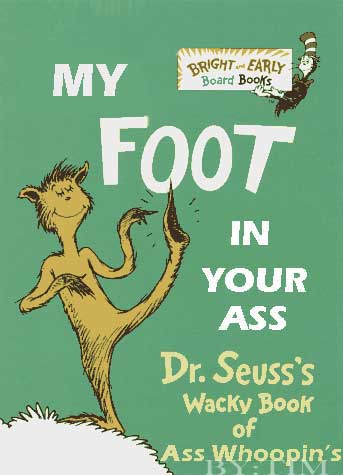
Yup, my arrogant naivety had its ass kicked by reality.
What about you? What reality has kicked your ass that you were naive or arrogant about?
image from
image from
image from
image from
Subscribe to:
Posts (Atom)